Friday, January 18, 2013

Aircraft Industry Uses for Titanium

Titanium has countless uses in light and heavy industrial manufacturing all over the world. Literally thousands of consumer products contain titanium. Given the metal’s widespread popularity in retail goods, it is even more important in heavy industry, especially in the construction of aircraft.

Both military and commercial airplanes use a large amount of titanium in their wings, propellers, and landing gear. Because of the metal’s amazing strength and very low weight, it is far superior to steel in every application.

Perhaps the only negative aspect of titanium use involves cost. Some experts think the price of the wonder metal will decline as it becomes ubiquitous in commerce.

Weight is of utmost concern to aircraft designers and engineers. Because titanium is so much lighter than steel, and equally as strong, it is used throughout the design of the plane, from exterior parts to dozens of engine components. If there were no titanium, the modern aircraft industry as we know it would not be able to survive.

Because titanium can withstand temperature extremes, aircraft engineers use it extensively in engine parts. Unlike steel, titanium almost never cracks or breaks and functions properly in both very high and very low temperatures.

Titanium also resists rust, which means it has yet another huge advantage over steel. Airplanes tend to gather moisture as they travel, which is why titanium parts are used extensively in a plane’s exterior components. No rust means a longer life for all the plane’s parts that contain titanium.

Titanium is present in hundreds, even thousands of consumer products, but is more vital to the aircraft industry than to any other. Aluminum and titanium are commonly paired to create an alloy substance that is extremely strong, yet cheaper than pure titanium. In the modern age of aircraft construction, there is no doubt that titanium is the most important single substance.

Thursday, December 20, 2012

The Correct Way to Weld Titanium

Titanium screws are an essential part of modern industry. Strong and resilient, the small screws last for decades and resist corrosion and disfigurement. Learning how to properly weld titanium sheets or parts is a valuable skill. Nor does it have to be a complicated one, since few basic tools and little specialized knowledge are necessary. Locate a pair of cotton work gloves, a hair dryer, some alcohol, a standard welding torch, and the metal sheets or parts to be welded. It is smart not to use your regular work gloves since you need a perfectly clean surface for welding. Titanium welding calls for a pristine surface. In fact, any tiny pieces of dirt or grime will cause discoloration and possible disfigurations of the piece. Always remove all dust and dirt from the metal before welding. Titanium screws are used in practically every industrial application because they are inexpensive and last a very long time. Use the alcohol to disinfect the metal. Then, eliminate all residual moisture with the hair dryer. Once the sheeting or part is completely dry and clean, you are ready to weld. The key thing to remember during welding is to regulate the argon flow. If the argon stream becomes too intense or too slack, then your final piece will look discolored or swirled. Titanium screws come in all shapes and sizes for literally thousands of different industrial uses. Once the welding job is complete, maintain caution when handling the metal. Until the titanium piece is completely cool, it is susceptible to disfigurement and discoloration. Continue to wear the cotton gloves while handling the welded item for at least several hours after the task is complete. Titanium screws, and other titanium components, play a vital role in the modern industrial world. A proper welding job can create a piece that will last for many decades.

Wednesday, November 14, 2012

Benefits of Medical Grade Titanium

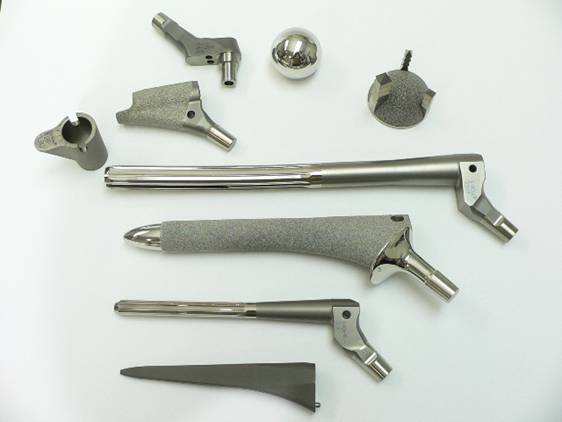
Titanium benefits are many. The automotive, architectural and aerospace worlds use the metal a lot to benefit technology on a regular basis. But none of these use it more than the medical world. Titanium bar resists corrosion so much that the human bone makes it a perfect host for things like titanium rods, plates or pins. The dental part of medicine has their hand in titanium surgical treatments as well. Titanium alloys are great because they give the body almost no chance of infection due to the purity of the metal. They are neither fracture-prone nor are they prone to corrosion. Take a look at some of these benefits of medical grade titanium: · Corrosion Resistant · Non-toxic · Long-lasting · Strong · Lightweight · Non-ferromagnetic · Cost-efficient · Biocompatible · Flexibility · Long range availability A couple of the best benefits that medical grade titanium are its corrosion resistance and the high ratio concerning strength-to-weight. Put this together with the fact it isn’t toxic and the ability to fight corrosion from all bodily fluids and you have a perfect metal when it comes to medicine. In fact, no other metal can do what titanium does. This alloy is all long-lasting and durable as well. When a doctor inserts titanium screws, pins, plates, rods or cages, they can last for two decades or maybe more. Dental titanium might even last longer. In fact, there are very few reasons why medical facilities have not already made the switch over to medical grade titanium.

Friday, October 12, 2012

Titanium is Hypoallergenic?

If you have been limited to wearing plastic jewelry because of some kind of metal allergy, there is good reason you should try your hand at Titanium. Unlike cobalt, chromate and nickel, Titanium shouldn’t be the source of your skin discoloration, rashes or irritation like it is for others.

Titanium is hypoallergenic which means it doesn’t react to chlorine, sunlight or salt water any other bodily fluids that can secrete from a body. This is the main reason why titanium is being used in many medical implants like artificial knees and hips. In fact, this is the reason why jewelry made from titanium doesn’t cause adverse reactions.

When it comes to looks, titanium is one of the most beautiful metals on the planet as well as one of the hardest and lightest metals known to mankind. It is because of this reason that it is a popular in jewelry making and other type of consumers manufacturing.

Titanium block watches are also rising in popularity as of late. In this case, the bezel and the band of fine watches are made from titanium. Even top selling brands like Citizen, Tissot and Skagen are using the metal in the production of a lot of their watches. It's because of the metal’s lightness and strength that makes it a study and well crafted timepiece.

So whether it is a skin allergy or it is the fact that you want a stylish metal watch, you just can’t go wrong by owning titanium bar jewelry. It's a hypoallergenic, great looking, lightweight yet strong metal and this combo of great attributes is what makes the metal perfect for outstanding uses.

Friday, September 28, 2012

How is Titanium Made?

In order to make a titanium block or ingot, there is a specific scientific process that must be carefully followed. Titanium is abundant in the crust of the earth, but does not occur by itself. Rather, it is present in rutile, limonite sphene, iron ores, and titanates. Almost seventy years ago, William Kroll developed a method by which titanium could be produced commercially into the form of a titanium block. The minerals that contain titanium must be charged with a chlorinator in order to make them spongy. At this stage, the substance is referred to as titanium tetrachloride. The chlorinator causes the ores to become porous. After the oxygen is removed from the titanium tetrachloride, a colorless material is left behind. This substance is then distilled. A chemical process is initiated which results in a metallic titanium sponge. An electrode vacuum arc furnace is needed at this point in order to transform the metallic sponge into a titanium block. Before that can occur, however, the spongy material must be completely crushed and pressed. When the pulverizing stage is complete, the resultant substance is then melted in the vacuum arc furnace at very high temperatures. Titanium block ingots are shaped into various sizes, with some weighing as much as six tons. After the development of pure titanium for industrial uses, an economic market soon came into being for the prized metal. With more than a hundred industrial uses, titanium is considered both a financial and scientific success. The aerospace industry uses the metal for its strength and low weight. That combination makes it perfect for dozens of high-tech aerospace applications. In the world of ornamental jewelry, titanium has become a very popular metal, leading to a large demand for titanium bracelets, necklaces, and rings. A titanium block can be melted down and uses in smaller quantities, making it usable for any number of other industries as well.

Thursday, August 9, 2012

Titanium Hair Straightener Benefits

There are many hair straighteners on the market, however two of today’s most sought-out would have to be the ceramic and the titanium plate kinds. This is mainly because both kinds surpass quality standards further than any other of competitors.

But hair straighteners were not created to be equal. To find out which one of these two suits you best, you will have to try them out yourself. Here are a few facts about each to help steer you in the right direction.

Titanium hair straighteners are typically preferred by hair salons and stylists. This is due to the titanium plates, which have the ability to heat up right away. The short heat-up period leaves you with less waiting time and gives you a faster option to get your hair done and get yourself out the door. A bonus? Heat is distributed so evenly that there is no chance of you scorching your head.

With titanium hair straighteners, salons usually will have a more efficient time servicing clients because they will be able to accommodate more customers in a shorter amount of time. Titanium plate straighteners also give you professional results that will only come from these kinds of hair straighteners.

Ceramics can provide the new hair stylist an easy way to get started off with their routine. Ceramic plated-style hair straighteners will usually provide a person will a gentle warm temperature that will spread to a moderate but not too hot feeling. With most ceramic hair straighteners, your waiting time for temperatures to get just right is much longer than it would be than titanium, so salons do not like to use them very often. Yet for those who are just starting out with straightening their hair, the lower temperatures are less intimidating than the titanium models.

Monday, June 11, 2012

Titanium Watches

Men and women are discovering the beauty, benefits and durability of titanium watches. They have advantages over other materials such as stainless steel, platinum or gold filled watches because titanium is resistant to scratching, corrosion and is a very light weight metal. The most commonly known use for titanium watches is for diving watches because titanium isn’t impacted by exposure to extreme weather conditions or saltwater. Titanium didn’t make its way into the mainstream until nearly the mid 1970s; before that it was seen most regularly in construction of space craft and aviation materials. Once titanium is exposed to the atmosphere it forms an oxide film that helps resist corrosion. That makes this silver-gray material perfect for aircraft for which it is exposed to extreme atmospheric extremes. Titanium is a metal that is considered environmentally sound and is also in plentiful supply. While it may be slightly more expensive to manufacture than other metals, the price you pay for it is an investment in its beauty and durability. Even though titanium is durable and resistant to weather and scratches, it became more wide spread in its use as a material for jewelry because of its color. Because white metals, such as platinum and white gold, have seen resurgence in popularity in recent years, titanium and its color have become more prized in that aspect. Men that work in construction jobs or other positions in which their watch might take a battering, prefer titanium surplus over other jewelry materials because the watch will stay intact. For men that don’t work in careers in which their watches will be subjected to abuse, titanium is prized because of its beauty and appearance. The watches made from titanium are also extremely lightweight and aren’t affected by perspiration. While titanium is more expensive than stainless steel, it makes up for it in durability and scratch resistance. It’s becoming easier to find titanium watches that are less expensive which is helping to make them more mainstream when it comes to jewelry for men. Titanium is also becoming the metal of choice when it comes to wedding rings for both men and women. The metal is pliable and easily colored to set your wedding rings apart from other couples. Titanium helps you make a statement whether in a ring or a watch.