Showing posts with label titanium benefits. Show all posts

Wednesday, March 20, 2013

What to Know About Titanium Alloys


When titanium is combined with other metals it creates a metallic material known as a titanium alloy. The other metal in the alloy is typically small amounts of aluminum, tin, palladium or vanadium. Titanium alloys are created because they give improved properties over pure titanium and are better suited for different types of work where pure titanium is not quite ideal.

The enhanced characteristics include things such as good weldability (fabricability), corrosion resisitance, along with strength and stability at elevated temperatures. Because titanium is extremely hard, it can be a challenge to shape or weld. When mixed in with another metal, however, titanium often becomes easier to work with. Numerous alloys of other metals often contain minute amounts of titanium, however these are not considered a titanium alloy unless titanium comprises the majority of the substance.
  
Thirty-eight common types of titanium alloy exist. The general mix is made up of 90% titanium, 4% vanadium, and 6% aluminum and is known as Grade 5. This Grade 5 is also known as Titanium 6AL-4V, and is suitable for military use. This titanium grade remains stable in applications up to 752 degrees Fahrenheit. It is typically used in aircraft turbines, which become very hot due to quick rotations. Titanium comes in grades 1-38, and different industries tend to rely on different grades.

Often seen as a wonder metal, titanium is extremely light as well as exceedingly strong. In fact, it is nearly twice as strong as aluminum, and about equally as strong as steel. Yet titanium is 40% lighter than aluminum and 45% lighter than steel. In addition to this, it is non-reactive with the human body, which makes it ideal for medical implants. Unfortunately, titanium’s use has been limited by its high cost, making alloys often more affordable.

Wednesday, November 14, 2012

Benefits of Medical Grade Titanium

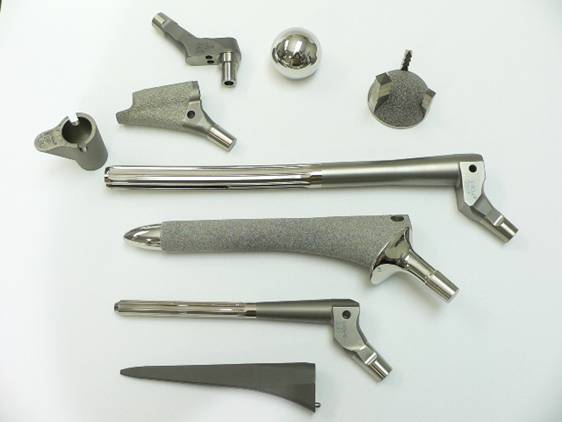
Titanium benefits are many. The automotive, architectural and aerospace worlds use the metal a lot to benefit technology on a regular basis. But none of these use it more than the medical world. Titanium bar resists corrosion so much that the human bone makes it a perfect host for things like titanium rods, plates or pins. The dental part of medicine has their hand in titanium surgical treatments as well. Titanium alloys are great because they give the body almost no chance of infection due to the purity of the metal. They are neither fracture-prone nor are they prone to corrosion. Take a look at some of these benefits of medical grade titanium: · Corrosion Resistant · Non-toxic · Long-lasting · Strong · Lightweight · Non-ferromagnetic · Cost-efficient · Biocompatible · Flexibility · Long range availability A couple of the best benefits that medical grade titanium are its corrosion resistance and the high ratio concerning strength-to-weight. Put this together with the fact it isn’t toxic and the ability to fight corrosion from all bodily fluids and you have a perfect metal when it comes to medicine. In fact, no other metal can do what titanium does. This alloy is all long-lasting and durable as well. When a doctor inserts titanium screws, pins, plates, rods or cages, they can last for two decades or maybe more. Dental titanium might even last longer. In fact, there are very few reasons why medical facilities have not already made the switch over to medical grade titanium.

Friday, September 28, 2012

How is Titanium Made?

In order to make a titanium block or ingot, there is a specific scientific process that must be carefully followed. Titanium is abundant in the crust of the earth, but does not occur by itself. Rather, it is present in rutile, limonite sphene, iron ores, and titanates. Almost seventy years ago, William Kroll developed a method by which titanium could be produced commercially into the form of a titanium block. The minerals that contain titanium must be charged with a chlorinator in order to make them spongy. At this stage, the substance is referred to as titanium tetrachloride. The chlorinator causes the ores to become porous. After the oxygen is removed from the titanium tetrachloride, a colorless material is left behind. This substance is then distilled. A chemical process is initiated which results in a metallic titanium sponge. An electrode vacuum arc furnace is needed at this point in order to transform the metallic sponge into a titanium block. Before that can occur, however, the spongy material must be completely crushed and pressed. When the pulverizing stage is complete, the resultant substance is then melted in the vacuum arc furnace at very high temperatures. Titanium block ingots are shaped into various sizes, with some weighing as much as six tons. After the development of pure titanium for industrial uses, an economic market soon came into being for the prized metal. With more than a hundred industrial uses, titanium is considered both a financial and scientific success. The aerospace industry uses the metal for its strength and low weight. That combination makes it perfect for dozens of high-tech aerospace applications. In the world of ornamental jewelry, titanium has become a very popular metal, leading to a large demand for titanium bracelets, necklaces, and rings. A titanium block can be melted down and uses in smaller quantities, making it usable for any number of other industries as well.

Thursday, August 9, 2012

Titanium Hair Straightener Benefits

There are many hair straighteners on the market, however two of today’s most sought-out would have to be the ceramic and the titanium plate kinds. This is mainly because both kinds surpass quality standards further than any other of competitors.

But hair straighteners were not created to be equal. To find out which one of these two suits you best, you will have to try them out yourself. Here are a few facts about each to help steer you in the right direction.

Titanium hair straighteners are typically preferred by hair salons and stylists. This is due to the titanium plates, which have the ability to heat up right away. The short heat-up period leaves you with less waiting time and gives you a faster option to get your hair done and get yourself out the door. A bonus? Heat is distributed so evenly that there is no chance of you scorching your head.

With titanium hair straighteners, salons usually will have a more efficient time servicing clients because they will be able to accommodate more customers in a shorter amount of time. Titanium plate straighteners also give you professional results that will only come from these kinds of hair straighteners.

Ceramics can provide the new hair stylist an easy way to get started off with their routine. Ceramic plated-style hair straighteners will usually provide a person will a gentle warm temperature that will spread to a moderate but not too hot feeling. With most ceramic hair straighteners, your waiting time for temperatures to get just right is much longer than it would be than titanium, so salons do not like to use them very often. Yet for those who are just starting out with straightening their hair, the lower temperatures are less intimidating than the titanium models.