Showing posts with label titanium metals. Show all posts

Wednesday, March 20, 2013

What to Know About Titanium Alloys


When titanium is combined with other metals it creates a metallic material known as a titanium alloy. The other metal in the alloy is typically small amounts of aluminum, tin, palladium or vanadium. Titanium alloys are created because they give improved properties over pure titanium and are better suited for different types of work where pure titanium is not quite ideal.

The enhanced characteristics include things such as good weldability (fabricability), corrosion resisitance, along with strength and stability at elevated temperatures. Because titanium is extremely hard, it can be a challenge to shape or weld. When mixed in with another metal, however, titanium often becomes easier to work with. Numerous alloys of other metals often contain minute amounts of titanium, however these are not considered a titanium alloy unless titanium comprises the majority of the substance.
  
Thirty-eight common types of titanium alloy exist. The general mix is made up of 90% titanium, 4% vanadium, and 6% aluminum and is known as Grade 5. This Grade 5 is also known as Titanium 6AL-4V, and is suitable for military use. This titanium grade remains stable in applications up to 752 degrees Fahrenheit. It is typically used in aircraft turbines, which become very hot due to quick rotations. Titanium comes in grades 1-38, and different industries tend to rely on different grades.

Often seen as a wonder metal, titanium is extremely light as well as exceedingly strong. In fact, it is nearly twice as strong as aluminum, and about equally as strong as steel. Yet titanium is 40% lighter than aluminum and 45% lighter than steel. In addition to this, it is non-reactive with the human body, which makes it ideal for medical implants. Unfortunately, titanium’s use has been limited by its high cost, making alloys often more affordable.

Friday, January 18, 2013

Aircraft Industry Uses for Titanium

Titanium has countless uses in light and heavy industrial manufacturing all over the world. Literally thousands of consumer products contain titanium. Given the metal’s widespread popularity in retail goods, it is even more important in heavy industry, especially in the construction of aircraft.

Both military and commercial airplanes use a large amount of titanium in their wings, propellers, and landing gear. Because of the metal’s amazing strength and very low weight, it is far superior to steel in every application.

Perhaps the only negative aspect of titanium use involves cost. Some experts think the price of the wonder metal will decline as it becomes ubiquitous in commerce.

Weight is of utmost concern to aircraft designers and engineers. Because titanium is so much lighter than steel, and equally as strong, it is used throughout the design of the plane, from exterior parts to dozens of engine components. If there were no titanium, the modern aircraft industry as we know it would not be able to survive.

Because titanium can withstand temperature extremes, aircraft engineers use it extensively in engine parts. Unlike steel, titanium almost never cracks or breaks and functions properly in both very high and very low temperatures.

Titanium also resists rust, which means it has yet another huge advantage over steel. Airplanes tend to gather moisture as they travel, which is why titanium parts are used extensively in a plane’s exterior components. No rust means a longer life for all the plane’s parts that contain titanium.

Titanium is present in hundreds, even thousands of consumer products, but is more vital to the aircraft industry than to any other. Aluminum and titanium are commonly paired to create an alloy substance that is extremely strong, yet cheaper than pure titanium. In the modern age of aircraft construction, there is no doubt that titanium is the most important single substance.

Thursday, December 20, 2012

The Correct Way to Weld Titanium

Titanium screws are an essential part of modern industry. Strong and resilient, the small screws last for decades and resist corrosion and disfigurement. Learning how to properly weld titanium sheets or parts is a valuable skill. Nor does it have to be a complicated one, since few basic tools and little specialized knowledge are necessary. Locate a pair of cotton work gloves, a hair dryer, some alcohol, a standard welding torch, and the metal sheets or parts to be welded. It is smart not to use your regular work gloves since you need a perfectly clean surface for welding. Titanium welding calls for a pristine surface. In fact, any tiny pieces of dirt or grime will cause discoloration and possible disfigurations of the piece. Always remove all dust and dirt from the metal before welding. Titanium screws are used in practically every industrial application because they are inexpensive and last a very long time. Use the alcohol to disinfect the metal. Then, eliminate all residual moisture with the hair dryer. Once the sheeting or part is completely dry and clean, you are ready to weld. The key thing to remember during welding is to regulate the argon flow. If the argon stream becomes too intense or too slack, then your final piece will look discolored or swirled. Titanium screws come in all shapes and sizes for literally thousands of different industrial uses. Once the welding job is complete, maintain caution when handling the metal. Until the titanium piece is completely cool, it is susceptible to disfigurement and discoloration. Continue to wear the cotton gloves while handling the welded item for at least several hours after the task is complete. Titanium screws, and other titanium components, play a vital role in the modern industrial world. A proper welding job can create a piece that will last for many decades.

Wednesday, November 14, 2012

Benefits of Medical Grade Titanium

Titanium benefits are many. The automotive, architectural and aerospace worlds use the metal a lot to benefit technology on a regular basis. But none of these use it more than the medical world. Titanium bar resists corrosion so much that the human bone makes it a perfect host for things like titanium rods, plates or pins. The dental part of medicine has their hand in titanium surgical treatments as well. Titanium alloys are great because they give the body almost no chance of infection due to the purity of the metal. They are neither fracture-prone nor are they prone to corrosion. Take a look at some of these benefits of medical grade titanium: · Corrosion Resistant · Non-toxic · Long-lasting · Strong · Lightweight · Non-ferromagnetic · Cost-efficient · Biocompatible · Flexibility · Long range availability A couple of the best benefits that medical grade titanium are its corrosion resistance and the high ratio concerning strength-to-weight. Put this together with the fact it isn’t toxic and the ability to fight corrosion from all bodily fluids and you have a perfect metal when it comes to medicine. In fact, no other metal can do what titanium does. This alloy is all long-lasting and durable as well. When a doctor inserts titanium screws, pins, plates, rods or cages, they can last for two decades or maybe more. Dental titanium might even last longer. In fact, there are very few reasons why medical facilities have not already made the switch over to medical grade titanium.

Friday, October 12, 2012

Titanium is Hypoallergenic?

If you have been limited to wearing plastic jewelry because of some kind of metal allergy, there is good reason you should try your hand at Titanium. Unlike cobalt, chromate and nickel, Titanium shouldn’t be the source of your skin discoloration, rashes or irritation like it is for others.

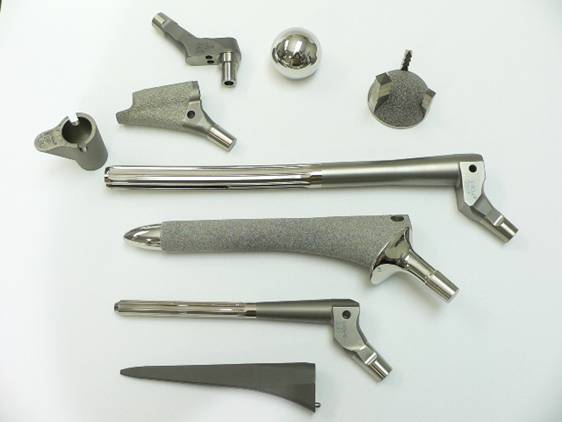
Titanium is hypoallergenic which means it doesn’t react to chlorine, sunlight or salt water any other bodily fluids that can secrete from a body. This is the main reason why titanium is being used in many medical implants like artificial knees and hips. In fact, this is the reason why jewelry made from titanium doesn’t cause adverse reactions.

When it comes to looks, titanium is one of the most beautiful metals on the planet as well as one of the hardest and lightest metals known to mankind. It is because of this reason that it is a popular in jewelry making and other type of consumers manufacturing.

Titanium block watches are also rising in popularity as of late. In this case, the bezel and the band of fine watches are made from titanium. Even top selling brands like Citizen, Tissot and Skagen are using the metal in the production of a lot of their watches. It's because of the metal’s lightness and strength that makes it a study and well crafted timepiece.

So whether it is a skin allergy or it is the fact that you want a stylish metal watch, you just can’t go wrong by owning titanium bar jewelry. It's a hypoallergenic, great looking, lightweight yet strong metal and this combo of great attributes is what makes the metal perfect for outstanding uses.